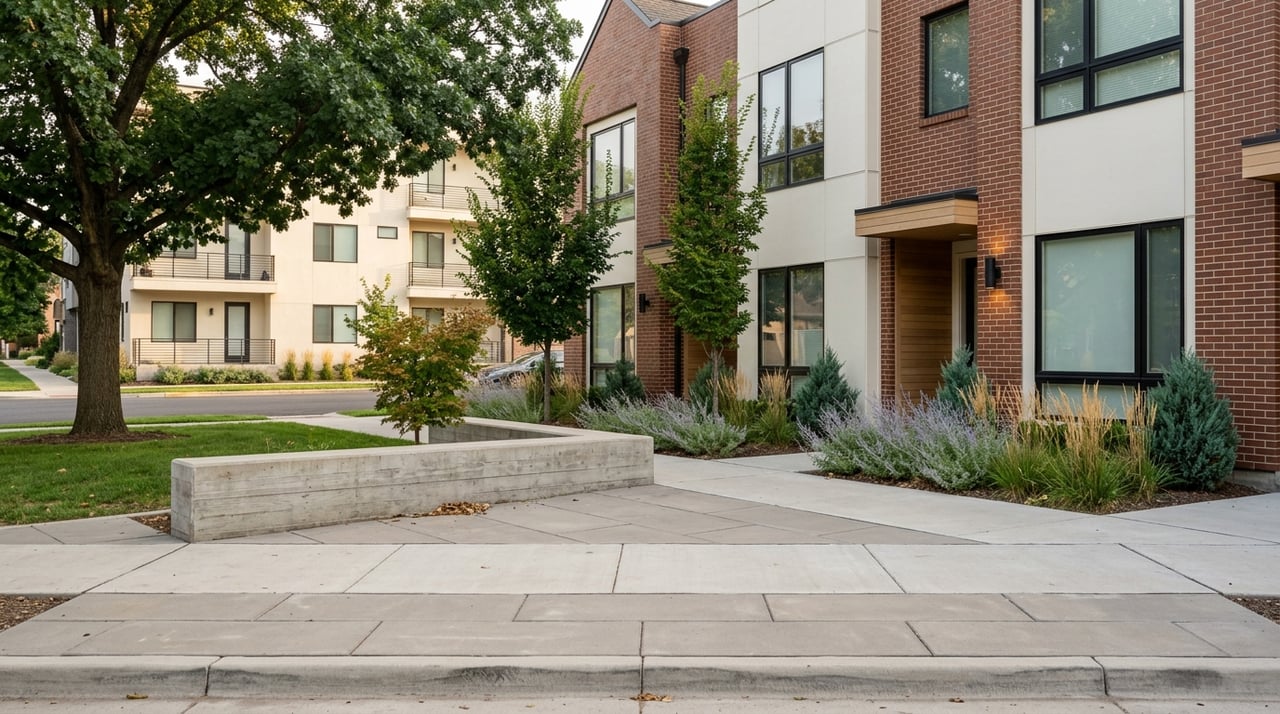
If you want a Denver neighborhood that blends parks, newer homes, local shopping, and solid transit access, Central Park deserves a closer look. For many buyers and renters, the big question is whether it feels more urban, more suburban, or somewhere in between. This neighborhood snapshot will help you understand how Central Park is laid out, what daily life looks like, and what to know before you make a move. Let’s dive in.
Central Park at a Glance
Central Park is one of Denver’s largest master-planned redevelopments, built on the former Stapleton International Airport site. According to Denver Public Library, demolition of the old airport began in 1999, and the first homes and stores opened by 2002. The neighborhood was renamed Central Park in 2021.
That history helps explain why the area feels different from many older Denver neighborhoods. Official community materials describe a New Urbanist design with walkable streets, mixed uses, neighborhood parks, front porches, and alley-loaded garages. In everyday terms, that creates a neighborhood that feels intentionally connected rather than randomly built over time.
Central Park Layout and Feel
One of the easiest ways to understand Central Park is to think of it as a collection of smaller districts. Official materials describe 12 neighborhoods across the community, with some sections closer to Northfield and the Rocky Mountain Arsenal National Wildlife Refuge and others nearer to Westerly Creek and Bluff Lake.
Because of that layout, Central Park does not revolve around one single downtown-style core. Instead, you will find several activity nodes spread throughout the neighborhood. That gives the area a balanced feel, with residential streets, green space, and retail centers working together.
Is Central Park Urban or Suburban?
For many people, the answer is both. Central Park offers a walkable, mixed-use environment with town centers and transit, but it is still more spread out than Denver’s denser central neighborhoods.
If you like the idea of having parks, shops, and gathering spaces nearby without feeling packed into a high-density grid, this middle-ground setup may appeal to you. It tends to work well for people who want everyday convenience with a bit more breathing room.
Parks and Outdoor Space
Outdoor access is one of Central Park’s biggest defining features. Denver Public Library notes that about 1,100 acres of the original 4,700-acre redevelopment site were set aside for parks and open space. That is a major part of why the neighborhood feels so green and active.
The official neighborhood site says Central Park includes 60 parks plus two dog parks. MCA materials also report that the association manages over 80 parks and parkways, along with more than 20 pocket parks, five sport fields, seven outdoor pools, and multiple splash pads.
Signature Green Spaces
Central Park itself is a major anchor for the area. Denver Parks & Recreation describes it as an 80-acre park and the city’s third-largest park, with athletic fields, jogging and biking paths, a sledding hill, amphitheater, play fountain, picnic areas, and indoor facilities.
Founders’ Green and Amphitheater is another well-known gathering space, especially for events near 29th Avenue. Conservatory Green also serves as an event-focused open space on the east side of the community.
What Outdoor Life Feels Like
In practical terms, Central Park is built for people who want to use their neighborhood, not just live in it. Pocket parks support smaller get-togethers, while larger greens and sport fields create room for recreation and community events.
That kind of park system can shape your daily routine in a real way. Whether you want a place to walk, bike, relax outdoors, or enjoy seasonal events, the neighborhood offers a lot of built-in options.
Shops, Dining, and Daily Convenience
Central Park’s commercial setup is spread across several town centers and retail hubs. The official neighborhood site highlights East 29th Avenue Town Center, Eastbridge Town Center, The Shops at Northfield, and Stanley Marketplace.
This setup means you are not relying on one main commercial strip for everything. Instead, daily errands, dining, and casual outings are distributed throughout the broader area.
Key Retail Areas
Eastbridge Town Center is described by official materials as a collection of boutique restaurants, shops, a salon, and fitness studios. Stanley Marketplace is a nearby former aviation building that now houses more than 50 locally owned businesses.
That mix gives the neighborhood a little variety. Some spots feel more like everyday convenience centers, while others are better for a weekend outing, meeting friends, or trying a local business.
Events and Community Programming
Central Park is not just a place with amenities. It is also a place with organized community activity. MCA materials say many events center around the South Green at the 29th Avenue Town Center, the North Green in Conservatory Green, and The Cube.
During warmer months, the calendar includes outdoor movies, live concerts, outdoor markets, and farmers markets. That kind of programming can make the neighborhood feel active and social without requiring you to leave the area for every event.
Transit and Getting Around
Transit is one of Central Park’s strongest practical advantages. RTD states that the A Line runs 23 miles between Denver Union Station and Denver International Airport, with 15-minute service from 6 a.m. to 8 p.m. Travel time is about 37 minutes end to end.
Central Park Station adds flexibility for daily commuting and airport trips. RTD says the station serves the A Line plus nine bus routes and includes 1,500 parking spaces.
Can You Live Here With Less Driving?
Many daily needs are built into the neighborhood, and rail plus bus access gives you more options than you may find in some other Denver neighborhoods. At the same time, Central Park is spread across multiple centers, so some residents will still use a car for certain errands or activities.
If you want a neighborhood where you can reduce how often you drive without fully depending on transit for every trip, Central Park offers a practical middle ground.
Recreation Beyond the Parks
In addition to open space, the neighborhood has strong year-round recreation infrastructure. Denver Parks & Recreation describes the Central Park Recreation Center as a regional-level facility with an indoor pool, lazy river, splash area, 25-yard lap pool, slide, gymnasium, fitness space, and rentable event space.
That matters if you are looking for more than trails and playgrounds. A neighborhood with both outdoor and indoor recreation can feel more functional across seasons, especially in a place like Denver where weather shifts throughout the year.
Housing in Central Park
Central Park has a broader housing mix than many buyers expect. Official neighborhood materials say current and planned housing includes luxury townhomes, condominiums, and cottage-style single-family homes.
The design language also pulls from traditional Denver architecture, including bungalow, Victorian, craftsman, and mission influences. Combined with features like front porches and rear garages, that helps newer construction feel more rooted and neighborhood-oriented.
What the Housing Mix Means for You
This variety can be helpful whether you are a first-time buyer, moving up, downsizing, or still deciding whether renting makes more sense. You are not limited to one housing type or one price point across the neighborhood.
The community’s affordable housing page also states that 10% of for-sale homes and 20% of for-lease homes are priced in the affordable range. It notes that these homes are integrated throughout the neighborhood rather than clustered in one section.
What Buyers Should Know About Schools
For buyers trying to understand school access, Central Park is not a simple one-school neighborhood. Swigert International School states that it is one of six neighborhood schools in the Central Park Enrollment Zone.
Denver Public Schools explains that families in the zone use SchoolChoice for ECE, kindergarten, middle school, and high school. Swigert also notes that the zone includes Bill Roberts, Inspire, Isabella Bird, Westerly Creek, and Willow at the elementary level.
Why This Matters for Your Search
If schools are part of your home search, it is important to understand the choice process early. You should not assume one automatic neighborhood assignment based only on the home’s address.
A clear plan can help you evaluate homes more confidently and avoid surprises later. This is one area where local guidance can be especially valuable during your search.
HOA and Neighborhood Management
Central Park has a more organized neighborhood structure than many older parts of Denver. MCA materials state that property owners within the neighborhood boundaries are members of the association and help fund the operation of community facilities through assessments.
That structure supports the parks, pools, alleys, and events that shape the neighborhood experience. It can also mean a more managed feel compared with neighborhoods that evolved over a longer period without the same level of shared oversight.
Who Central Park May Suit Best
Central Park can be a strong fit if you want newer housing, extensive parks, planned community amenities, and access to transit. It may also appeal to you if you like the idea of several neighborhood hubs instead of one dense commercial center.
For first-time buyers, the range of housing types and built-in conveniences can be especially attractive. For move-up or downsizing buyers, the neighborhood offers a structured, amenity-rich environment with options across different home sizes and styles.
Bottom Line on Living in Central Park
Central Park stands out because it offers a little bit of everything: green space, community programming, multiple shopping nodes, recreation facilities, and useful transit connections. It does not feel like old Denver, but that is part of the appeal for many people.
If you are looking for a neighborhood that feels planned, active, and practical for day-to-day life, Central Park is worth a serious look. And if you want help comparing Central Park to other Denver neighborhoods, Nick Leibbrand can help you sort through the options with clear, local guidance.
FAQs
What is Central Park in Denver known for?
- Central Park is known for its master-planned layout, extensive park system, multiple town centers, community events, and transit access through the RTD A Line.
What is the housing mix like in Central Park Denver?
- Central Park includes condominiums, luxury townhomes, and cottage-style single-family homes, with design influences drawn from traditional Denver architecture.
How many parks are in Central Park Denver?
- Official community materials say Central Park has 60 parks plus two dog parks, while MCA materials report management of over 80 parks and parkways along with pocket parks, sport fields, pools, and splash pads.
Is Central Park Denver good for commuters?
- Central Park offers strong commuter convenience with the RTD A Line, access to nine bus routes at Central Park Station, and 1,500 parking spaces for park-and-ride use.
How do schools work in Central Park Denver?
- Central Park is served through an enrollment zone structure, and Denver Public Schools says families use SchoolChoice for ECE, kindergarten, middle school, and high school rather than assuming a single automatic school assignment.
Does Central Park Denver have an HOA?
- Property owners within Central Park’s boundaries are members of the neighborhood association, and assessments help support shared facilities, parks, pools, alleys, and community programming.